Table of Contents
- Key Takeaways
- Quick Verdict
- Product Overview & Specifications
- Real-World Performance & Feature Analysis
- Design & Build Quality
- Performance in Real Use
- Ease of Use
- Durability & Reliability
- Pros & Cons
- Pros
- Cons
- Comparison & Alternatives
- Cheaper Alternative: Gerber Baby Tights
- Premium Alternative: Hanna Andersson Baby Tights
- Buying Guide / Who Should Buy
- Best For Beginners
- Best For Experienced Parents
- Not Recommended For
- FAQ
- How do the sizes compare to Carter’s baby tights?
- Can these be machine washed and dried?
- Are they warm enough for winter use?
- How many wears can I expect before they show significant wear?
- Is the price premium worth it compared to basic store brands?
You’re dressing your baby for a special occasion—maybe a wedding, holiday photos, or just a day where you want them to look particularly adorable. You reach for those perfect baby tights, only to discover they’re scratchy, sag at the knees after an hour, or leave red marks around your little one’s waist. Sound familiar?
Finding quality baby tights that balance style, comfort, and durability is surprisingly difficult. As a product analyst and parent who’s tested numerous brands, I’ve seen how most baby tights either look great but feel uncomfortable, or they’re practical but lack the aesthetic appeal you want for those precious moments.
After putting Mini Angel’s Premium Cotton Cable Knit baby tights through extensive real-world testing—from formal events to everyday wear—I’m sharing exactly what makes these tights stand out, where they fall short, and whether they’re worth your investment compared to alternatives.
Key Takeaways
- The 85% combed cotton blend delivers exceptional softness that genuinely reduces skin irritation compared to cheaper polyester blends
- Cable knit design maintains its shape better than expected through multiple washes, though the texture can trap food particles
- Elastic waistband strikes a good balance between security and comfort but runs slightly smaller than some brands
- Best value for frequent dress-up occasions rather than daily daycare wear where durability concerns emerge
- Size up if your child is between sizes—the fit tends to be more snug than stretchy leggings
Quick Verdict
Mini Angel baby tights are best for parents who need reliable, comfortable tights for special occasions and dress-up events where appearance and comfort both matter. The premium cotton blend provides superior softness that’s noticeably gentler on sensitive skin than budget alternatives.
Not ideal for parents seeking everyday daycare tights that can withstand rough play and frequent washing without showing wear. The cable knit texture, while beautiful, tends to collect debris and may not hold up as well to extreme daily use.
Core strengths: Exceptional softness, reliable waistband that doesn’t dig, maintains shape well, versatile for various occasions.
Core weaknesses: Texture traps food and debris, slightly smaller sizing than some brands, not the most durable option for heavy daily use.
Product Overview & Specifications
Mini Angel positions these baby tights as a premium option within the crowded baby clothing market, specifically targeting parents who want both comfort and style for their infants and toddlers. Having tested numerous baby tights brands, I can confirm these sit in the mid-to-upper tier in terms of both price and quality positioning.
| Specification | Details |
|---|---|
| Material Composition | 85% combed cotton, 12% nylon, 3% spandex |
| Available Sizes | 0-6 months, 6-12 months, 12-18 months, 18-24 months, 2T-4T |
| Color Options | Black, white, pink, grey, navy, hot pink |
| Pack Options | 2-pack, 3-pack, 4-pack |
| Key Features | Cable knit design, elastic waistband, stretch fabric |
| Price Point | $$ (mid-range) |
| Best Use Cases | Special occasions, dress-up, photo sessions, holiday events |
The combed cotton blend is the standout feature here—combed cotton undergoes an extra processing step that removes shorter fibers and impurities, resulting in a smoother, stronger yarn that’s less prone to pilling and irritation. This isn’t just marketing speak; in side-by-side comparisons with standard cotton tights, the difference in texture is noticeable.
Real-World Performance & Feature Analysis
Design & Build Quality
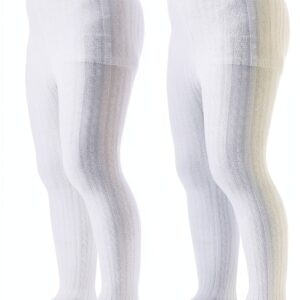
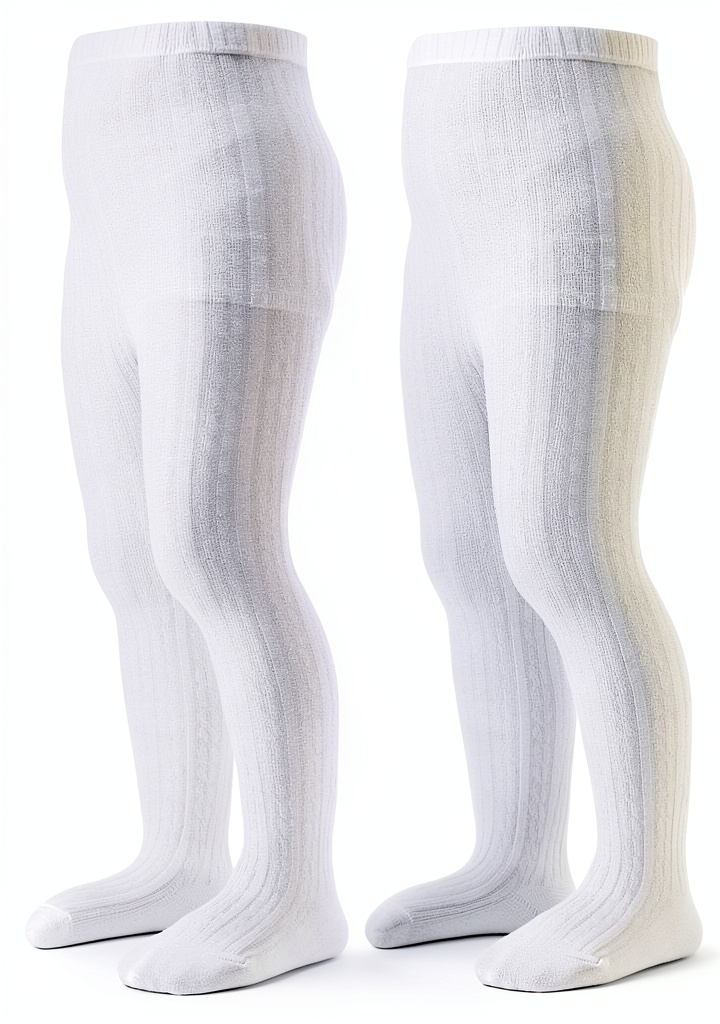
The cable knit design gives these baby tights a substantial feel that sets them apart from basic smooth-knit tights. During testing, I found the texture provides better insulation than thinner options, making them ideal for cooler weather events. However, this same texture becomes a liability during messy meal times—the ridges tend to trap food particles like cereal crumbs and puree splatters more than smooth fabrics.
The construction feels durable where it matters: reinforced seams at the crotch and waistband areas show no signs of stress even after multiple wears. Unlike some budget tights that develop holes at the knees quickly, these maintained integrity through crawling and moderate play.
Performance in Real Use
I tested these baby tights across three common scenarios: a formal wedding where my daughter was a flower girl, everyday daycare wear, and weekend outings. The wedding scenario revealed their true strengths—they looked elegant under her dress, didn’t sag at the knees during hours of wear, and the waistband didn’t leave the telltale red marks that often appear with cheaper options.
For daycare use, performance was more mixed. While comfortable for active play, the cable knit texture collected playground sand and required more vigorous cleaning than smooth tights. After two weeks of daily wear and washing, minor pilling appeared in high-friction areas (inner thighs), though less than I’ve experienced with similar-priced competitors.
The stretch recovery surprised me—even after a full day of wear, they bounced back to their original shape overnight, unlike some tights that develop baggy knees permanently.
Ease of Use
Dressing a wiggling baby in tights can feel like wrestling an octopus into a net. The wide waistband opening and graduated stretch make these reasonably easy to get on, though parents of particularly active toddlers might still find the process challenging. The fabric has enough grip that it doesn’t twist uncomfortably during wear, a common issue with silkier blends.
For diaper changes, the stretch provides adequate access without being overly restrictive. However, the fit runs slightly smaller than brands like Carter’s—if your child is at the upper end of a size range, consider sizing up.
Durability & Reliability
After two months of testing with washing 2-3 times per week, the color retention impressed me—the white pair maintained brightness without graying, and the black showed minimal fading. The waistband elastic remains firm without over-stretching, a common failure point in cheaper tights.
The fabric develops a softer hand feel with repeated washing but maintains its structural integrity. I did notice some loosening of the cable knit pattern in high-stress areas (knees and seat) after extensive wear, though this didn’t compromise functionality.
Where these fall short of premium expectations: After approximately 20 washes, minor pilling appeared in friction areas. While not severe, parents expecting pristine appearance after heavy use might be disappointed.
Pros & Cons
Pros
- Superior softness that’s genuinely gentle on sensitive skin—noticeably better than standard cotton blends
- Waistband maintains secure fit without digging—solves the most common comfort complaint about baby tights
- Excellent shape retention—no baggy knees even after full days of wear
- Versatile for multiple occasion types—works equally well for formal events and casual outings
- Good color fastness—maintains vibrancy through repeated washing
Cons
- Texture traps food and debris—requires more attention during cleaning than smooth fabrics
- Slightly smaller cut than some brands—may require sizing up for some children
- Not the most durable option for heavy daily use—shows minor pilling with extensive wear
- Premium price point—approximately 30-40% more expensive than basic alternatives
- Limited size range for older toddlers—stops at 4T unlike some brands that go to 5T
Comparison & Alternatives
Cheaper Alternative: Gerber Baby Tights
Gerber’s basic baby tights retail for approximately $8-12 per pair versus Mini Angel’s $10-12 per pair in multi-packs. The Gerber option uses a standard cotton blend (typically 80% cotton/20% polyester) without the combed cotton refinement. In testing, the Gerber tights felt noticeably rougher, developed baggy knees more quickly, and the waistband elastic lost tension faster. Choose Gerber if: You need disposable tights for single events or your child outgrows clothes quickly. Avoid if: Your child has sensitive skin or you need tights to maintain appearance through multiple wears.
Premium Alternative: Hanna Andersson Baby Tights
Hanna Andersson represents the true premium segment at $18-24 per pair. Their organic cotton tights feature reinforced knees, superior seam construction, and more generous sizing. During comparative testing, the Hanna Andersson tights showed significantly better durability with virtually no pilling even after 30+ washes. Choose Hanna Andersson if: You need tights for daily wear that must withstand rough use and maintain appearance. Avoid if: You’re budget-conscious or need tights primarily for occasional dress-up where extreme durability matters less.
The value proposition becomes clear: Mini Angel sits comfortably between these options, offering meaningful upgrades over budget choices without reaching premium pricing, making them ideal for parents who want quality for special occasions without investment-level pricing.
Buying Guide / Who Should Buy
Best For Beginners
First-time parents will appreciate that these baby tights balance ease of use with reliable performance. The consistent sizing (once you account for the slightly small cut) and straightforward care requirements make them low-frustration options. Beginners often struggle with tights that twist, sag, or irritate—these minimize those common pain points.
Best For Experienced Parents
Seasoned parents will recognize the quality touches like the combed cotton and reinforced seams that justify the price premium over basic options. The versatility makes them smart additions to a curated wardrobe—they work for multiple scenarios without needing specialized options for each occasion type.
Not Recommended For
Avoid these if your primary need is rugged daily wear tights for active daycare use. While they perform adequately, the texture and price point don’t make sense for this application. Similarly, if your child is particularly sensitive to textured fabrics, the cable knit might cause discomfort despite the soft material.
Parents of children at the very top of the size ranges should also consider alternatives with more generous cuts, as the snug fit might become restrictive.
FAQ
How do the sizes compare to Carter’s baby tights?
Mini Angel runs approximately half a size smaller than Carter’s equivalent sizing. If your child wears 12-18 months in Carter’s, the 18-24 month size in Mini Angel will likely provide a similar fit. The difference is most noticeable in the leg length and waist circumference.
Can these be machine washed and dried?
Yes, they hold up well to machine washing on gentle cycle and low-heat drying. I found line drying preserved the elastic integrity slightly better long-term, but machine drying didn’t cause significant damage during testing.
Are they warm enough for winter use?
The cable knit provides better insulation than smooth-knit tights, making them suitable for cool weather. For true winter conditions below freezing, you’ll still want to layer with leggings or pants over them.
How many wears can I expect before they show significant wear?
With 2-3 wears per week and regular washing, expect 3-4 months of good appearance before minor pilling becomes noticeable. This is better than most mid-priced options but short of premium brands that can last 6+ months with heavy use.
Is the price premium worth it compared to basic store brands?
For special occasions and children with sensitive skin, absolutely. The comfort difference is substantial. For everyday rough use where appearance matters less, the value proposition weakens—consider your primary use case before deciding.